
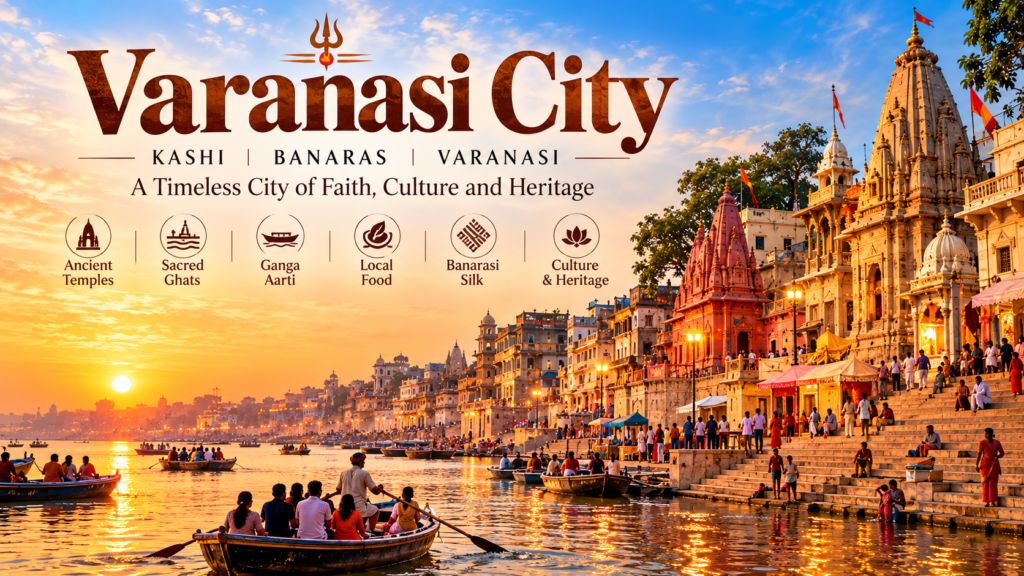
For some, Varanasi is a place of pilgrimage. For others, it is a city of learning, art, heritage and discovery. Its identity comes from the way these experiences exist side by side in everyday life.
Why Is Varanasi City Famous?
Varanasi is widely recognised for its religious significance, historic riverfront and cultural heritage. The city is especially sacred to devotees of Lord Shiva and attracts pilgrims from across India and abroad.
Its importance extends beyond Hindu traditions. Nearby Sarnath is associated with Gautama Buddha’s first sermon. Varanasi also has longstanding connections with Jain traditions, education, literature and music.
Morning prayers, busy markets, narrow lanes, traditional crafts and evening ceremonies along the Ganga are all part of the city’s living culture.
History of Varanasi: Kashi and Banaras
Varanasi has a history extending back thousands of years. It is often described as one of the world’s oldest continuously inhabited cities, although the precise beginnings of the settlement are difficult to establish.
The name Kashi is traditionally associated with light and spiritual knowledge. Banaras and Benares are familiar historical names, while Varanasi is the city’s official name.
A commonly cited explanation connects the name Varanasi with the Varuna and Asi waterways associated with the region. Religious traditions also describe Kashi as the eternal abode of Lord Shiva.
Over centuries, Varanasi developed into an important centre of philosophy, Sanskrit learning, literature, music, religious debate and craftsmanship.
Read more from the official Varanasi district history.
The Ganga Ghats: The Heart of Varanasi City
The ghats are among the most recognisable features of Varanasi. These steps lead down to the River Ganga and serve as places for prayer, bathing, ceremonies, walking and observing daily life.
- Dashashwamedh Ghat: Famous for the evening Ganga Aarti.
- Assi Ghat: Popular for morning walks, sunrise views and a relaxed atmosphere.
- Manikarnika Ghat: An important Hindu cremation ghat where visitors should maintain respectful distance.
- Namo Ghat: A prominent modern riverfront attraction.
- Panchganga Ghat: A historic ghat associated with religious traditions.
A sunrise boat ride offers a different perspective of the riverfront. In the evening, the Ganga Aarti provides an opportunity to experience one of the city’s best-known public ceremonies.
Famous Temples in Varanasi
Temples are central to the religious identity of Kashi. Visitors often include these places in their itinerary:
- Shri Kashi Vishwanath Temple: Dedicated to Lord Shiva and one of the twelve Jyotirlingas.
- Maa Annapurna Temple: Associated with Goddess Annapurna, the deity of nourishment.
- Kaal Bhairav Temple: Dedicated to Kaal Bhairav, a revered form of Lord Shiva.
- Sankat Mochan Hanuman Temple: A well-known temple dedicated to Lord Hanuman.
- Durga Kund Temple: A prominent temple dedicated to Goddess Durga.
- New Vishwanath Temple at BHU: Located within the Banaras Hindu University campus.
Read our detailed Famous Temples in Varanasi guide for a practical darshan route and travel plan. Replace this placeholder with your published article URL.
Culture, Food and Banarasi Silk
Varanasi’s culture is visible in its music, literature, festivals, handicrafts and daily conversations. The city has strong associations with classical music, devotional singing, Hindi literature and Bhojpuri cultural traditions.
It is also famous for Banarasi silk sarees and traditional weaving. Local artisans produce textiles, brocades, wooden toys, metalwork and other handicrafts.
Visitors can explore local favourites such as kachori-sabzi, tamatar chaat, seasonal sweets, lassi and Banarasi paan. Food availability and recipes vary by shop and season.
Education and the Modern City
Varanasi is not only a pilgrimage destination. It is also an important centre of education and healthcare, with institutions such as Banaras Hindu University contributing to its academic life.
Modern roads, transport facilities, riverfront projects and tourism services exist alongside older neighbourhoods and traditional markets. This contrast between heritage and urban development is an important part of present-day Varanasi.
Best Places to Explore Around Varanasi
Sarnath
Located approximately 10 km northeast of Varanasi, Sarnath is an important Buddhist site with Dhamek Stupa and archaeological remains.
Ramnagar Fort
Located across the Ganga, Ramnagar Fort offers a glimpse into the region’s royal history.
Banaras Hindu University
BHU is known for its educational heritage, green campus and New Vishwanath Temple.
Traditional Markets
Explore markets known for textiles, religious items, handicrafts and traditional food.
Browse the official Varanasi tourist places directory for more attractions.
Best Time to Visit Varanasi City
October to March is generally a comfortable period for sightseeing, with cooler weather than the peak summer months. Summers can be very hot, while monsoon conditions may affect outdoor activities.
Major festivals such as Dev Deepawali and Maha Shivratri can bring large crowds. Arrange accommodation in advance when travelling during festivals and check local traffic restrictions and temple guidance before departure.
Frequently Asked Questions About Varanasi City
1. What are the other names of Varanasi?
Kashi and Banaras are the two best-known traditional names. Benares is another historical spelling.
2. Why is Varanasi called Kashi?
Kashi is traditionally associated with light and spiritual knowledge and is deeply connected with the city’s religious identity.
3. What is Varanasi most famous for?
Varanasi is famous for Kashi Vishwanath Temple, the River Ganga, historic ghats, Ganga Aarti, Banarasi silk, local food and cultural traditions.
4. How many days are enough to explore Varanasi?
Two days are suitable for major temples, ghats and Ganga Aarti. Three days allow more time for Sarnath, markets and relaxed sightseeing.
5. Is Varanasi only a religious city?
No. Varanasi is also known for education, music, literature, handicrafts, tourism, trade and everyday cultural life.
Explore Kashi with Kashinagari
Varanasi City is best understood by experiencing its different sides: the quiet river at sunrise, the energy of its markets, the devotion at its temples and the traditions carried forward by its people.
Whether you are planning your first visit or exploring the heritage of Kashi, Kashinagari helps you discover the city’s places, culture and travel experiences.
Explore more travel guides on Kashinagari.com and plan your journey through Varanasi.