
Vindhyachal Temple, dedicated to Maa Vindhyavasini, is one of the most revered Goddess temples in Uttar Pradesh. Located in Vindhyachal, Mirzapur district, near the River Ganga, this pilgrimage destination is known for its Shakti worship, ancient religious traditions and the sacred Trikona Parikrama connecting three important Devi temples.
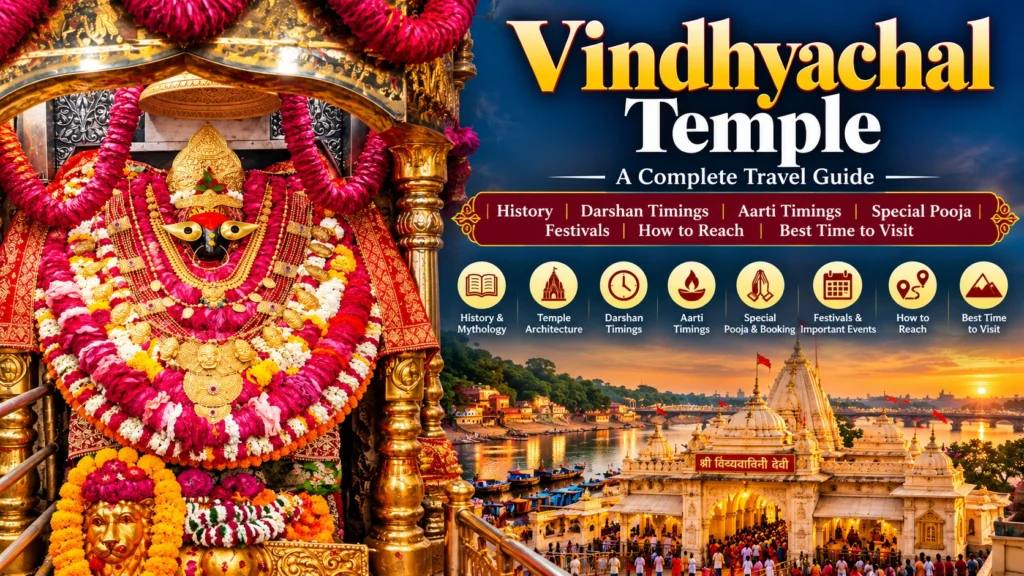
Whether you are visiting for darshan, Navratri, aarti or a spiritual journey through the Vindhya region, this guide covers the temple’s history, mythology, architecture, rituals, timings and essential travel information.
1. Introduction to Vindhyachal Temple
Maa Vindhyavasini Temple is the principal shrine of Vindhyachal Dham. Devotees worship the Goddess as a manifestation of Adi Shakti, the divine feminine power. The temple is located in Mirzapur district, Uttar Pradesh, within the wider Vindhya region and close to the Ganga.
Vindhyachal is especially known for the Trikona Parikrama, a pilgrimage connecting three prominent shrines:
- Maa Vindhyavasini Temple: The principal shrine of Vindhyachal Dham.
- Kali Khoh Temple: Associated with Maa Kali.
- Ashtabhuja Devi Temple: Dedicated to the eight-armed form of the Goddess.
Many devotees visit all three temples as part of one pilgrimage. The route and walking conditions can vary, so allow sufficient time to complete it comfortably.
2. Vindhyachal History and Mythology
The religious history of Vindhyachal is preserved through Hindu scriptures, local traditions and generations of pilgrimage. The Uttar Pradesh Vindhya Dham Teerth Vikas Parishad website refers to Maa Vindhyavasini and Vindhyachal in several traditional religious texts, including the Markandeya Purana, Skanda Purana and Devi Bhagavata.
The Story of Maa Vindhyavasini
According to Hindu tradition, the Goddess is associated with the divine power that protects dharma and destroys evil. Local religious accounts connect Vindhyachal with the story of Goddess Durga’s victory over Mahishasura, which is celebrated during Durga Puja and Navratri.
3. Religious Significance of Vindhyachal Dham
Vindhyachal is an important centre of Shakta worship, the Hindu tradition devoted to the Goddess. Devotees visit Maa Vindhyavasini to pray for protection, family well-being, prosperity and spiritual strength.
The three temples of the Trikona Parikrama are commonly associated in devotional tradition with three forms of the Goddess:
- Maa Vindhyavasini: Associated with Mahalakshmi.
- Maa Kali at Kali Khoh: Associated with Mahakali.
- Maa Ashtabhuja: Associated with Mahasaraswati.
Completing the circuit is considered auspicious by many devotees. This significance comes from religious tradition rather than a measurable or guaranteed spiritual outcome.
4. Vindhyachal Temple Architecture
The main temple is a living place of worship, not simply a historical monument. Its most important space is the garbhagriha, or inner sanctum, where Maa Vindhyavasini is enshrined.
The Uttar Pradesh Vindhya Dham Teerth Vikas Parishad describes the temple’s architectural heritage in the context of traditional North Indian temple design. For visitors, the most meaningful features are the main shrine, worship spaces and the surrounding sacred landscape.
Unlike a monument visited only for its architecture, the temple remains an active pilgrimage centre. Darshan arrangements, rituals and festival crowds shape the visitor experience throughout the year.
5. Vindhyachal Darshan Timings
The Parishad’s published schedule lists the following regular darshan windows for Maa Vindhyavasini Temple:
The temple closes for certain rituals, including the midday and night aartis. These time windows are published by the Parishad, but timings and crowd-management arrangements may change during festivals and special occasions.
Before travelling: Check the latest official darshan schedule and announcements. Do not assume that the temple will remain open for general darshan throughout every listed aarti period.
6. Vindhyachal Aarti Timings
Aarti is a devotional ritual in which lamps are offered to the deity alongside prayers, hymns and other worship observances. The Parishad’s published schedule lists four principal daily aartis:
| Aarti | Published Timing |
|---|---|
| Mangala Aarti | 4:00 AM–5:00 AM |
| Rajashri Aarti | 12:00 PM–1:30 PM |
| Chhoti Aarti | 7:15 PM–8:15 PM |
| Badi Aarti | 9:30 PM–10:30 PM |
For a comfortable visit, plan your arrival well before the aarti you want to attend. General darshan may pause during these ceremonies, so confirm the current schedule and entry arrangements directly with the temple administration.
Official reference: Vindhyachal Aarti and Shringar Timings.
7. Special Puja, Booking and Ritual Traditions
Daily worship at Vindhyachal includes aarti, shringar, offerings and other devotional practices. The specific rituals available to visitors may depend on temple arrangements, the occasion and the priests conducting the puja.
Common traditions associated with worship at Vindhyachal include:
- Shringar: Adorning the Goddess with garments, flowers and ornaments.
- Bhog or Naivedya: Offering food to the deity as part of worship.
- Red chunri and sindoor offerings: Devotional offerings associated with Shakti worship.
- Pradakshina: Circumambulating the shrine as an act of reverence.
- Trikona Parikrama: Visiting Maa Vindhyavasini, Kali Khoh and Ashtabhuja temples on the traditional pilgrimage circuit.
How to Check Special Puja Booking
For special puja, donations or other services, begin with the Uttar Pradesh Vindhya Dham Teerth Vikas Parishad website. Review the relevant service details and contact the administration to confirm availability, booking requirements and any charges.
Do not assume that every ritual can be booked online or that prices remain fixed. Verify the details before making a payment, and use official channels wherever available.
8. Festivals and Important Events at Vindhyachal
Chaitra Navratri
Celebrated during the spring season, Chaitra Navratri honours the Goddess through prayers, fasting, special pujas and devotional gatherings. It is an important time for pilgrims visiting Vindhyachal.
Shardiya Navratri
Observed in the autumn, Shardiya Navratri is another major festival at the temple. The number of devotees rises considerably, and the wider pilgrimage area becomes especially busy.
Durga Puja and Dussehra
These festivals celebrate the Goddess and the triumph of good over evil in Hindu tradition. Vindhyachal’s connection with Shakti worship makes this period religiously significant for many devotees.
Navratri is an excellent time to experience the devotional atmosphere, but it is also one of the busiest periods. Expect queues, traffic restrictions and possible changes to normal darshan timings.
9. Best Time to Visit Vindhyachal
October to March is generally a comfortable period for visiting because temperatures across the region are usually more pleasant than during peak summer.
- For a quieter visit: Consider a regular weekday outside major festivals and peak pilgrimage dates.
- For a festival experience: Visit during Chaitra or Shardiya Navratri, but prepare for heavy crowds.
- For the surrounding landscape: The monsoon can bring greener scenery, although rain may affect outdoor travel.
Tuesdays, Sundays, full-moon days and Navratri can attract larger crowds. If you are travelling with children or older family members, allow extra time and avoid rushing between temples.
10. How to Reach Vindhyachal Temple
Vindhyachal is in Mirzapur district, Uttar Pradesh, and can be reached by rail and road.
- By train: Vindhyachal Railway Station is the closest station according to the Parishad’s FAQ, approximately 1 km from the main temple. Not every major train stops there; Mirzapur Railway Station is another option, approximately 8 km away.
- By road: Taxis, auto-rickshaws and local transport connect Vindhyachal with Mirzapur and nearby towns. Vehicle access may be restricted near the temple during major festivals.
- By air: Varanasi’s Lal Bahadur Shastri International Airport is a practical regional option. From there, arrange onward road transport and confirm current travel times before departure.
For current transport and local access information, consult the official Vindhya Dham website before setting out.
11. Practical Tips for Visitors
- Check darshan and aarti timings on the day of your visit.
- Wear comfortable, modest clothing suitable for a place of worship.
- Keep valuables to a minimum and follow the current security instructions.
- Ask the temple administration about photography, restricted items and special puja arrangements.
- During Navratri, allow extra time for queues, road restrictions and walking.
- If planning the Trikona Parikrama, check the route and walking conditions before starting.
12. Frequently Asked Questions About Vindhyachal Temple
Where is Vindhyachal Temple located?
Maa Vindhyavasini Temple is located in Vindhyachal, Mirzapur district, Uttar Pradesh, near the River Ganga.
What is Vindhyachal famous for?
Vindhyachal is best known for Maa Vindhyavasini Temple, Shakti worship, Navratri celebrations and the Trikona Parikrama linking Vindhyavasini, Kali Khoh and Ashtabhuja temples.
What are the darshan timings at Vindhyachal Temple?
The Parishad publishes morning darshan from 5:00 AM to 12:00 PM, afternoon darshan from 1:30 PM to 9:30 PM, and night darshan from 10:30 PM to midnight. Confirm current timings before visiting because darshan pauses during certain rituals.
When is Mangala Aarti performed?
The published Mangala Aarti timing is 4:00 AM to 5:00 AM. Check the official schedule for updates before travelling.
Which festivals are most important at Vindhyachal?
Chaitra Navratri and Shardiya Navratri are major festivals. Durga Puja and Dussehra are also important occasions for devotees of the Goddess.
Is there an entry fee for darshan?
General darshan is commonly described as free, but special services or facilitated-darshan arrangements may have separate conditions or charges. Confirm current details through official channels.
How long does the Trikona Parikrama take?
The time depends on your pace, crowd conditions, route and time spent at each temple. Allow several hours and check local route guidance before starting.
Vindhyachal is more than a single temple visit: it is a living pilgrimage landscape shaped by devotion to Maa Vindhyavasini, traditional Shakti worship and the Trikona Parikrama. Whether you visit during Navratri or on a quieter weekday, checking the latest timings and planning your route will help you make the most of your journey.
Explore more temple guides, pilgrimage routes and travel information on Kashinagari.com to plan your journey through the sacred destinations of Uttar Pradesh.